Key Project Attributes
- Grades: 9-12
- Students: 3,200
- Scope: New Construction
- Size: 75,000 square feet (new), 60,000 square feet (renovation)
- Completion: 2020
A Dynamic Addition that Inspires Future-Ready Careers, Focused Collaboration, and Academic Innovation.
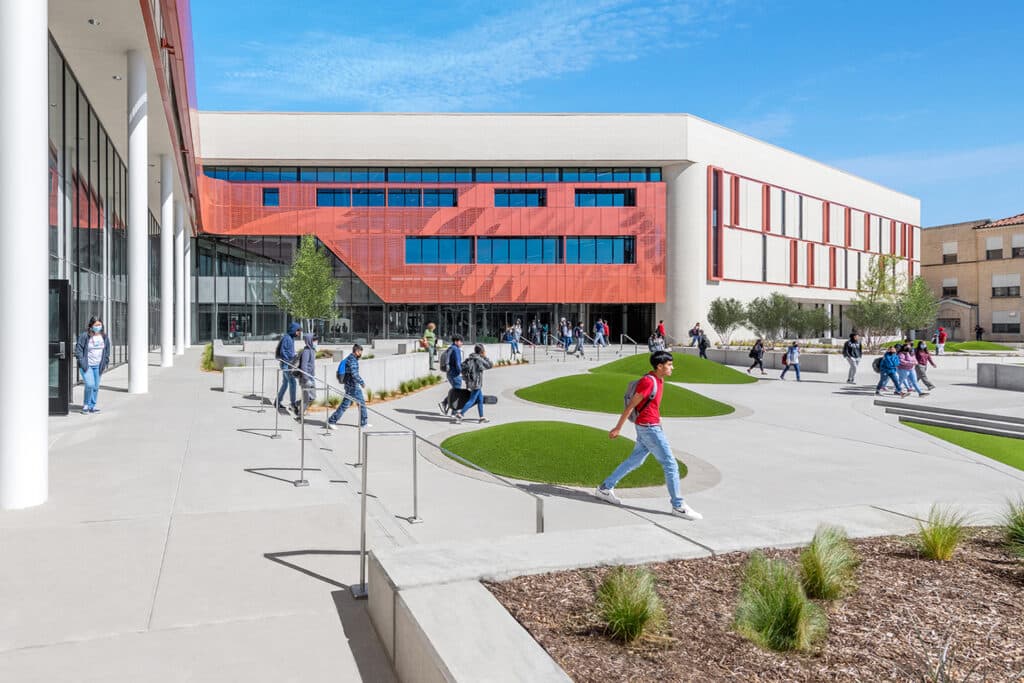
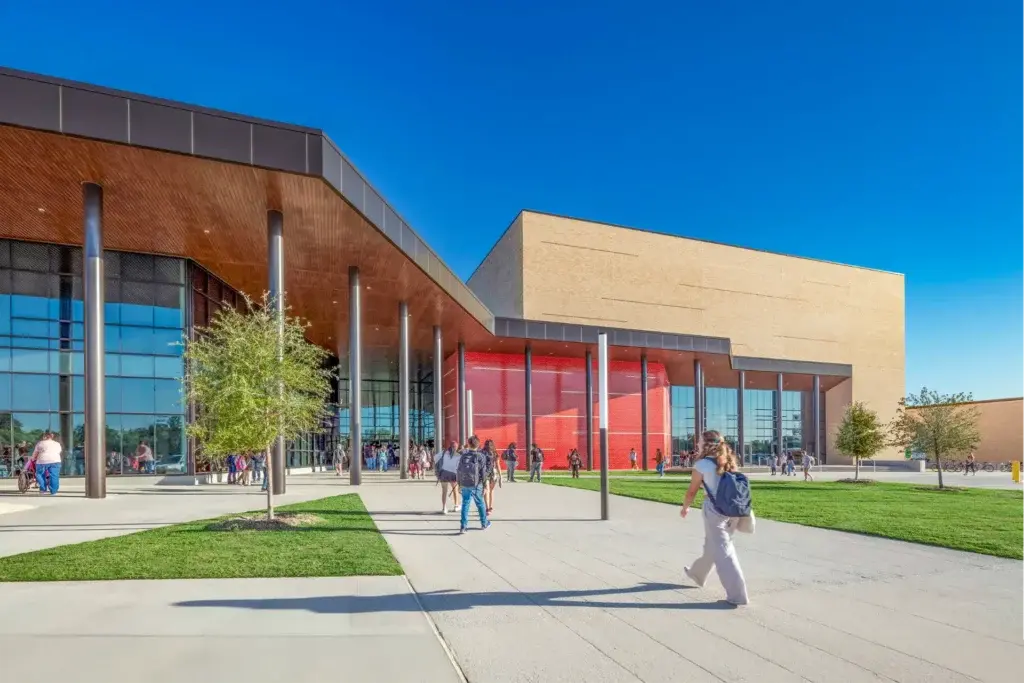
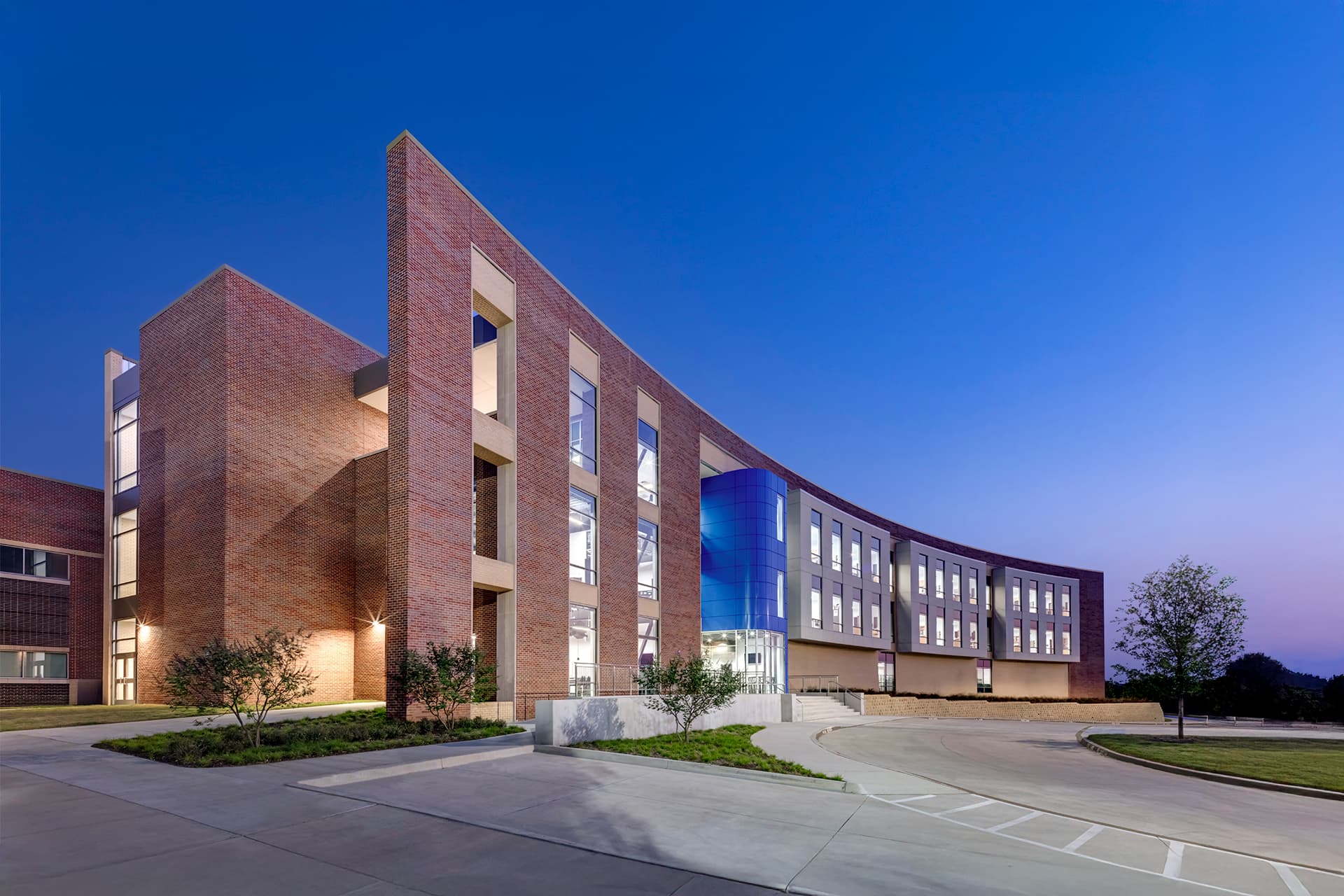
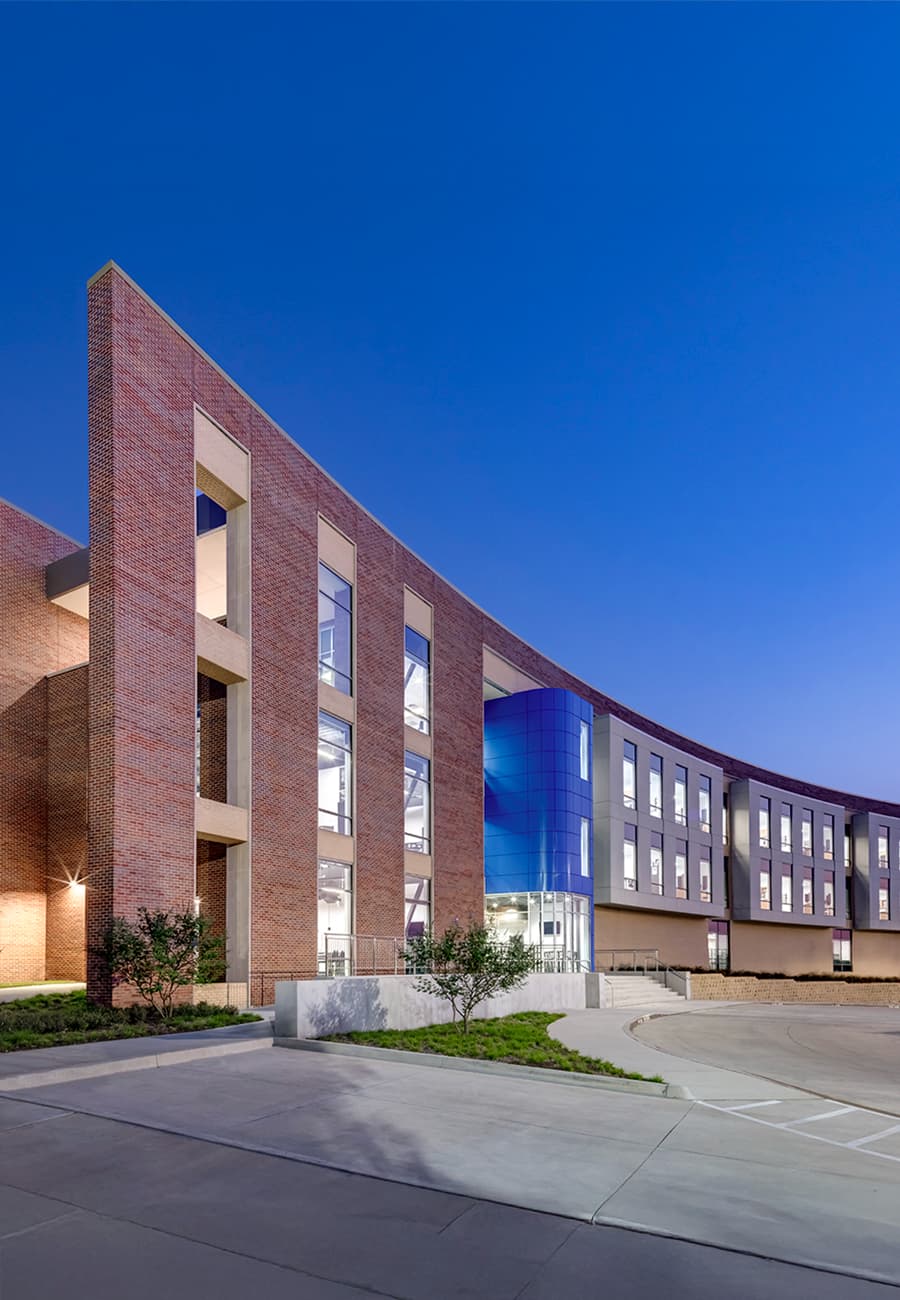
The new Career and Technical Education (CTE) and Classroom Addition at Byron Nelson High School provides flexible, future-ready learning spaces designed to accommodate the school’s robust student population growth. The three-story, 75,000-square-foot addition offers collaborative academic environments for an additional 700 students, increasing total campus capacity to 3,200 students.
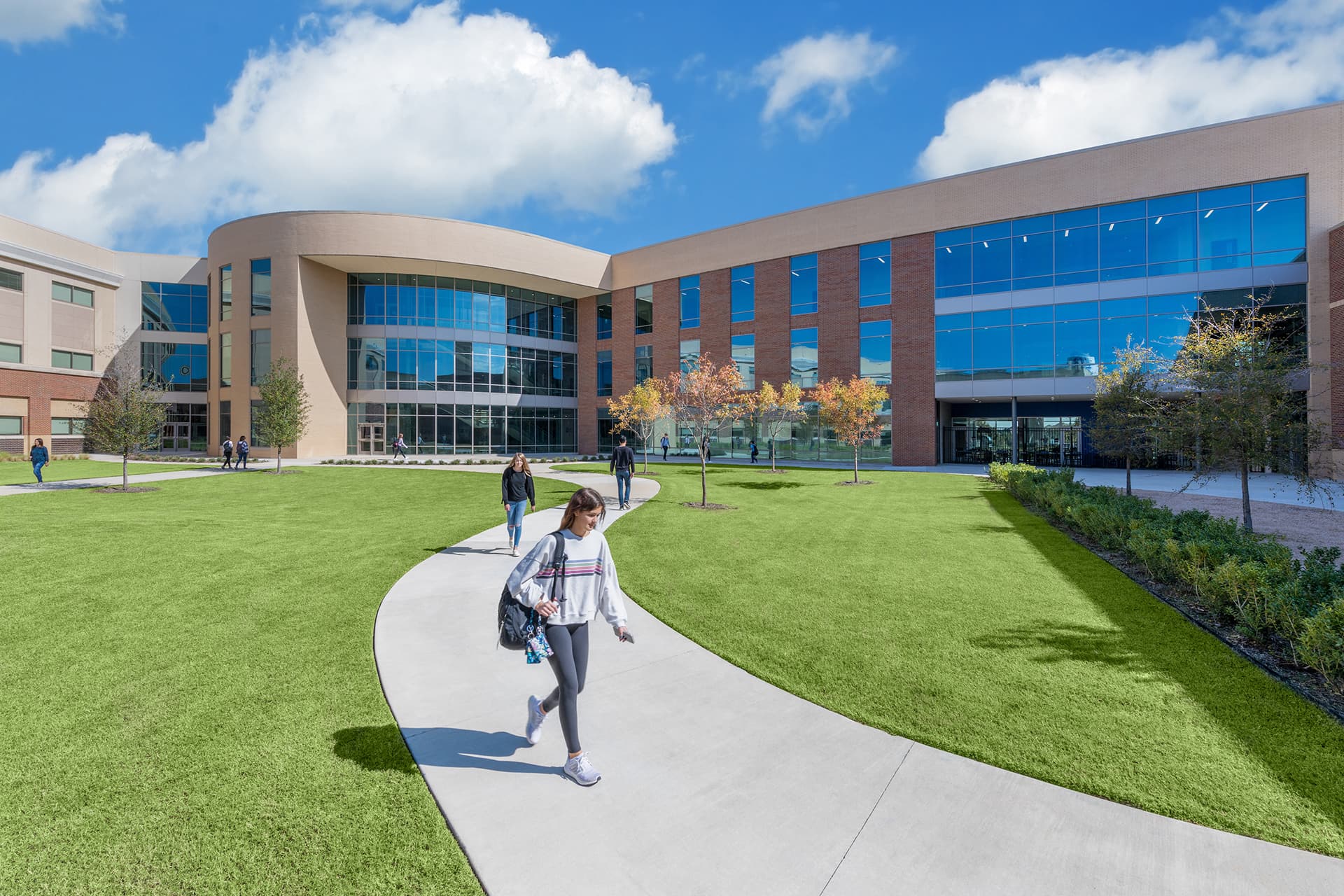
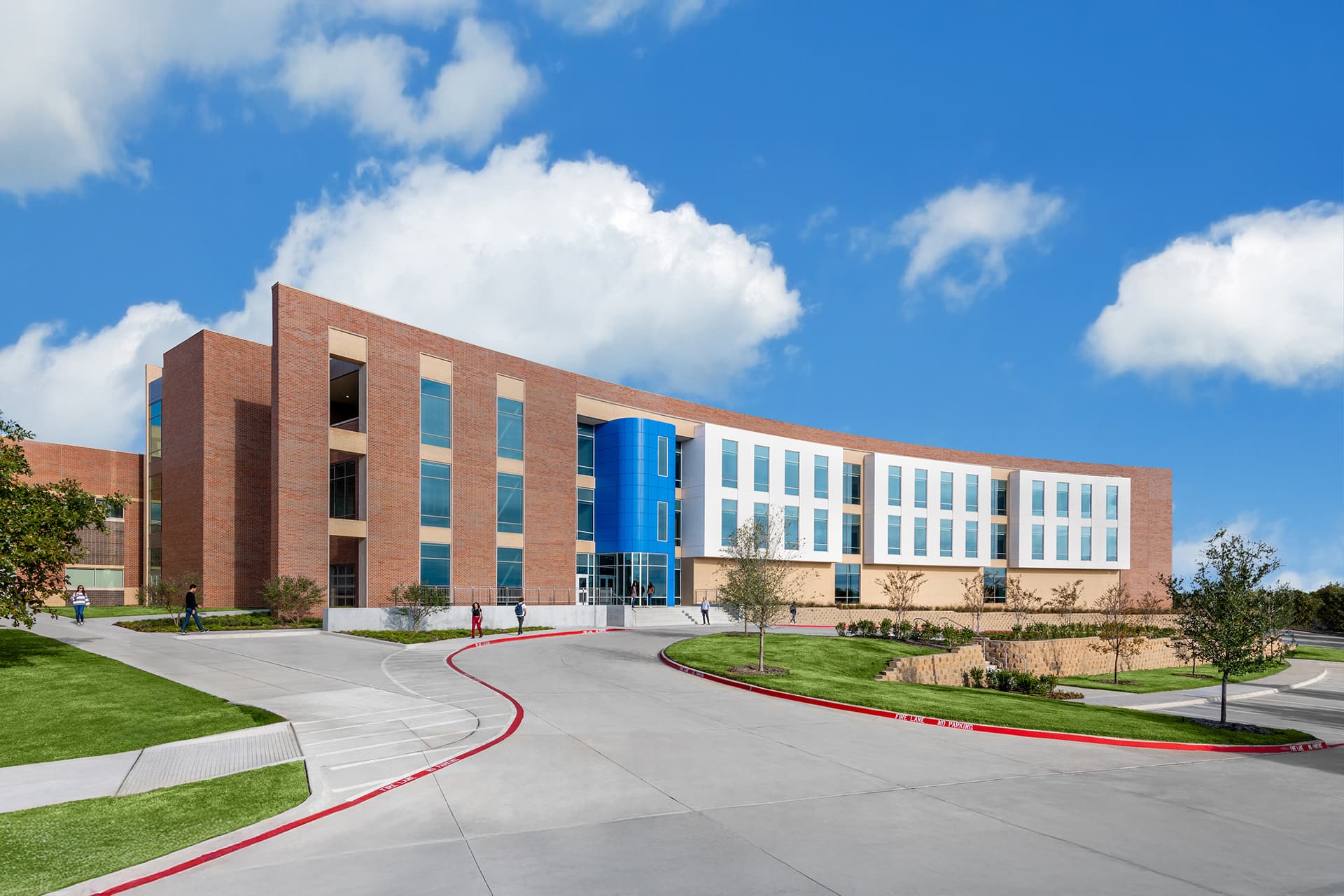
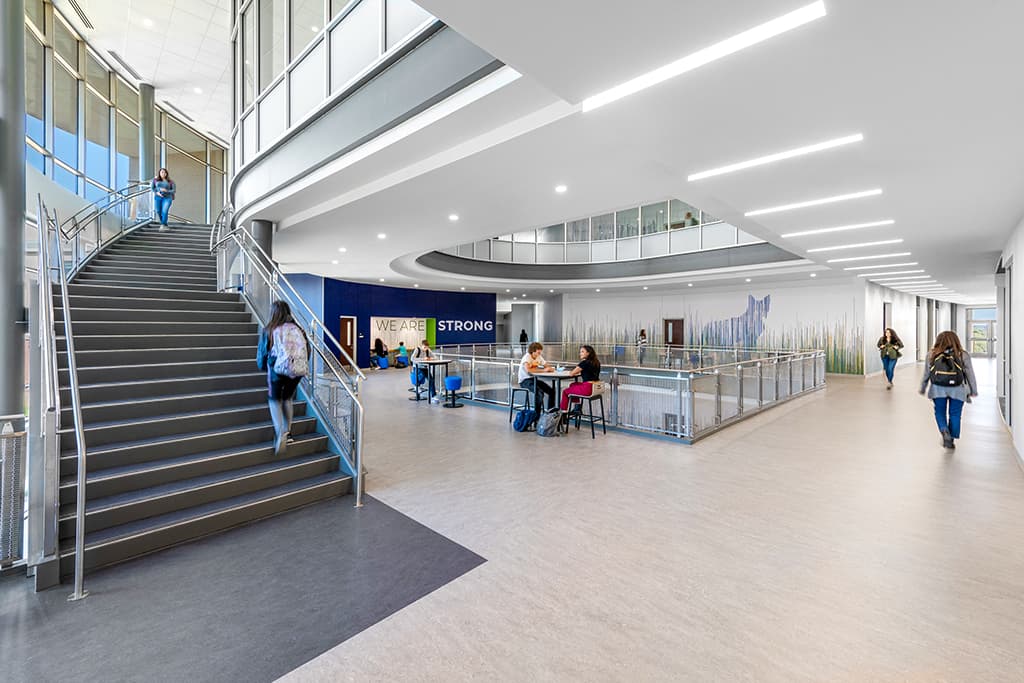
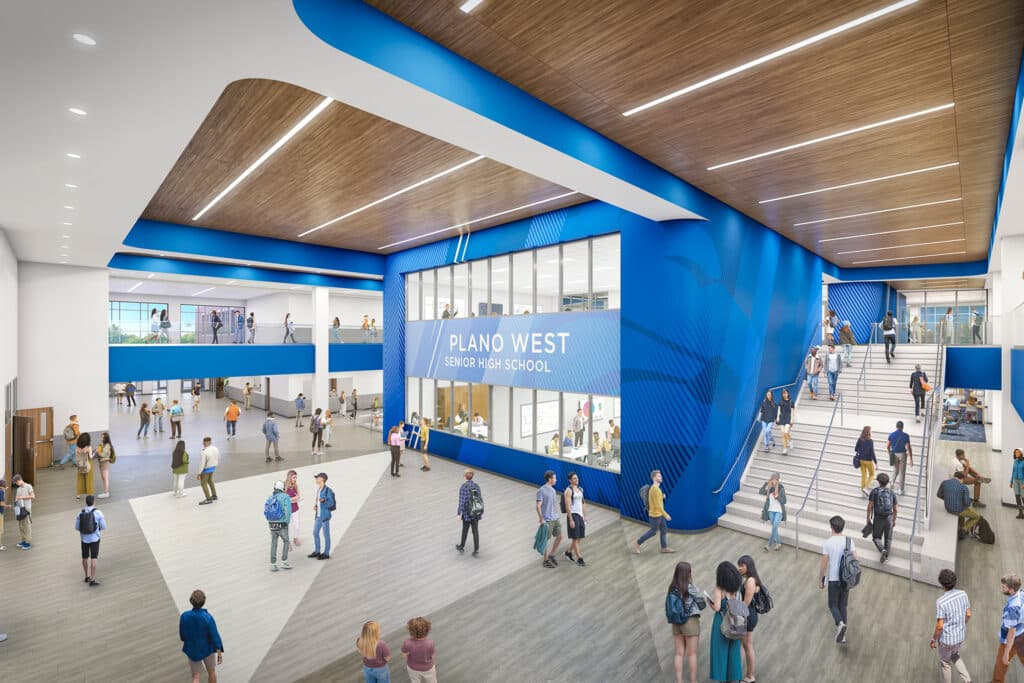
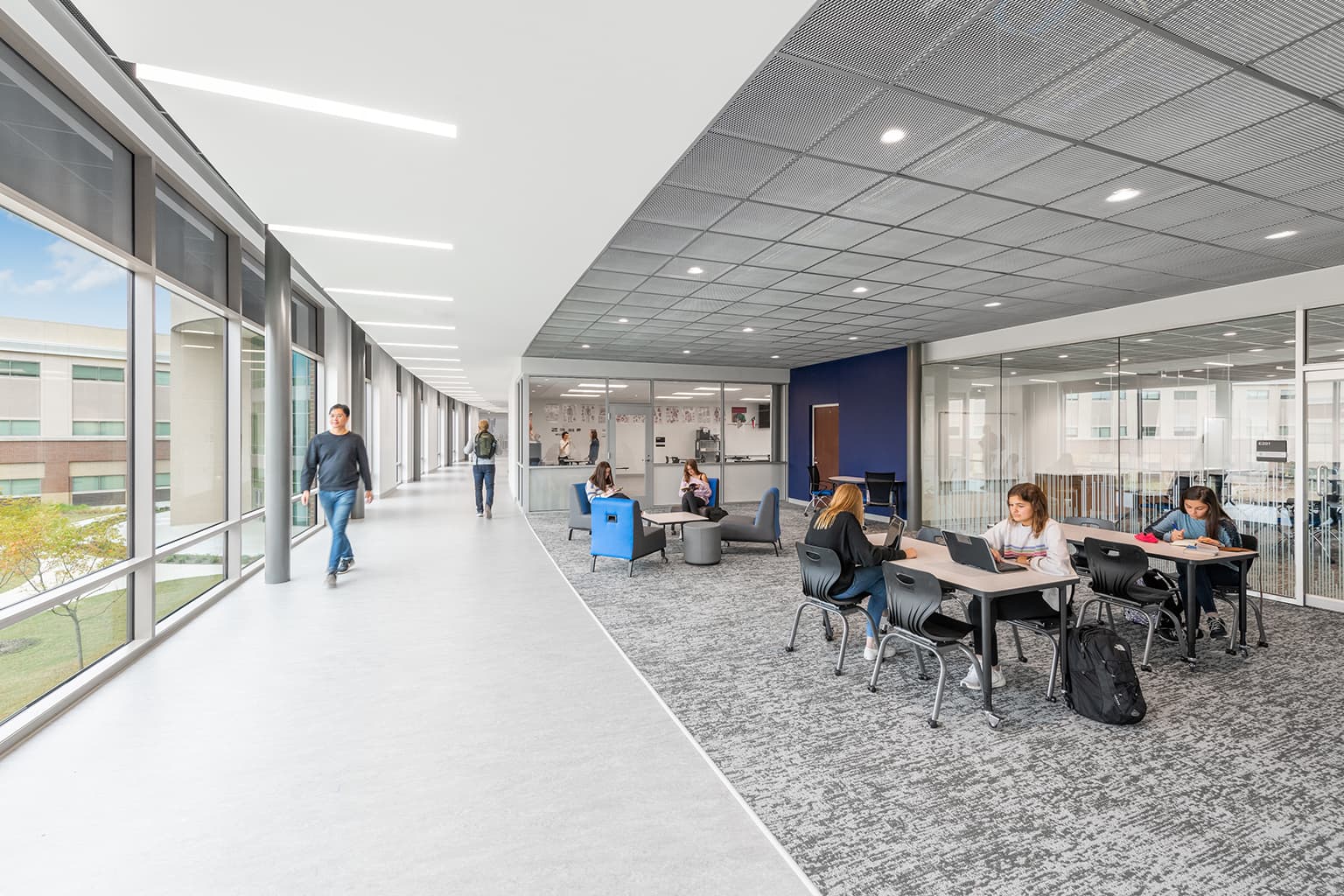
A gently curved, multi-story academic bar intersects a new student collaboration commons, creating vertical circulation and visual connections throughout the addition. The commons serves as both a destination and a functional hub—relieving congestion in the existing building while acting as a hinge between two distinct academic wings.
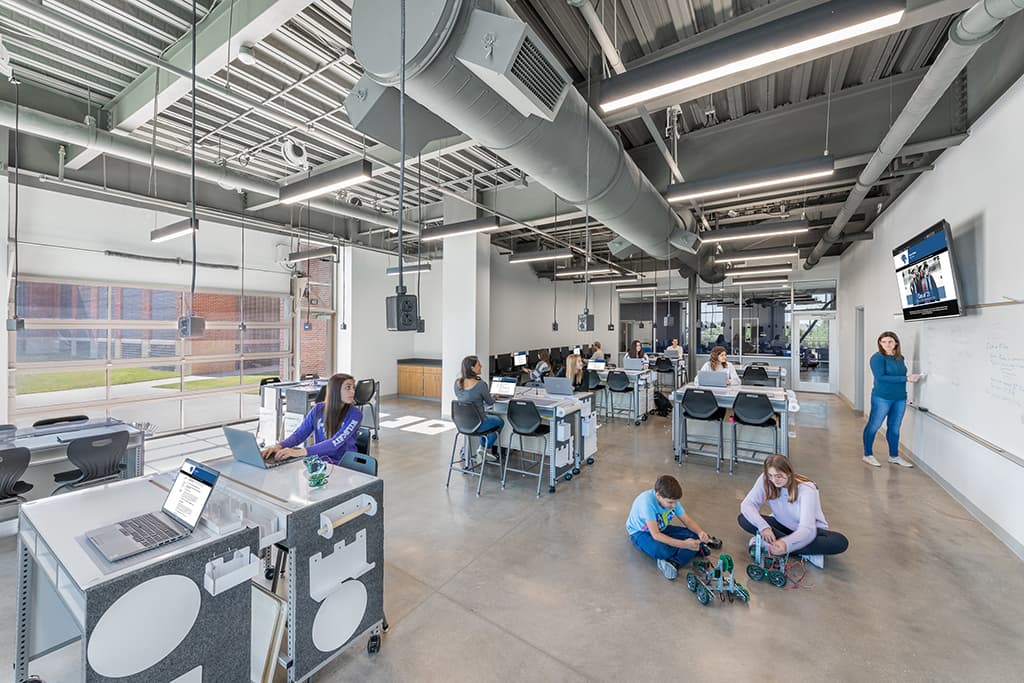
Located on the ground floor, the student-led Bobcat Bistro and adjacent culinary arts program feature a fully equipped cooking and baking kitchen, providing hands-on learning opportunities that prepare students for real-world careers. Nearby, a new engineering and robotics lab (maker space) extend into outdoor collaboration areas to support project-based learning and innovation.
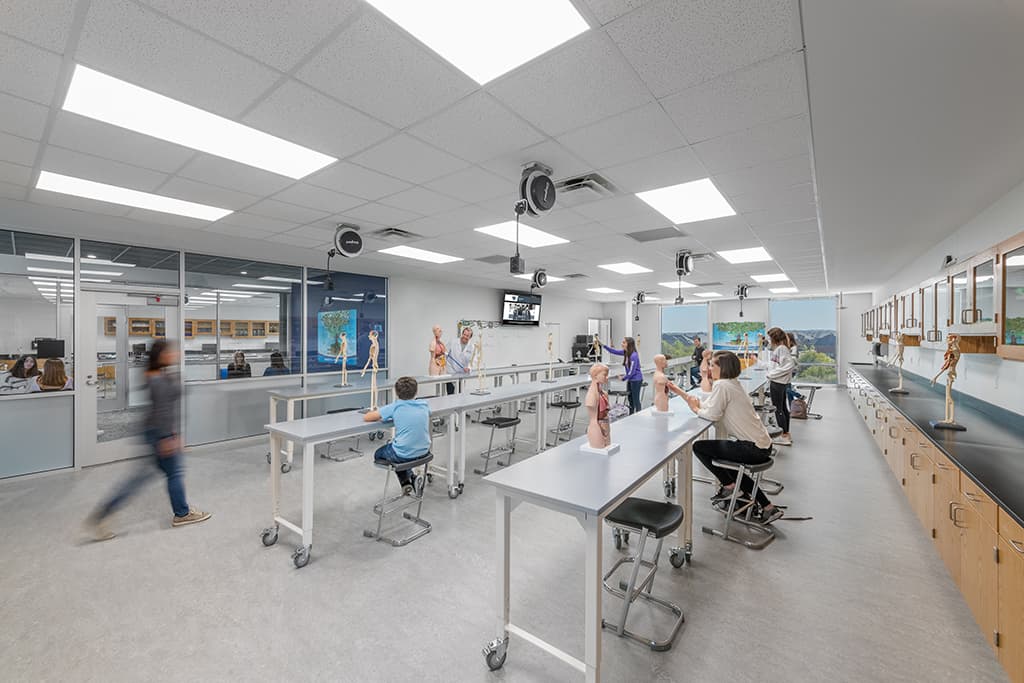
Upper levels house an expanded science program, including anatomy, biomedical (principles, innovation, and human body systems), health science, EMT, and six physics labs. Twelve core classrooms wrap around a central, light-filled atrium that promotes visibility, connection, and collaboration across all three levels.
The addition seamlessly integrates academic, technical, and social learning spaces—creating an adaptable environment that supports student growth, fosters innovation, and strengthens the identity of Byron Nelson High School’s expanding campus.
“The design team facilitated interactive design activities that engaged our students and teachers and ultimately influenced a creative outcome to the design. This process was powerful and established a spirit of ownership among the BNHS community!”